
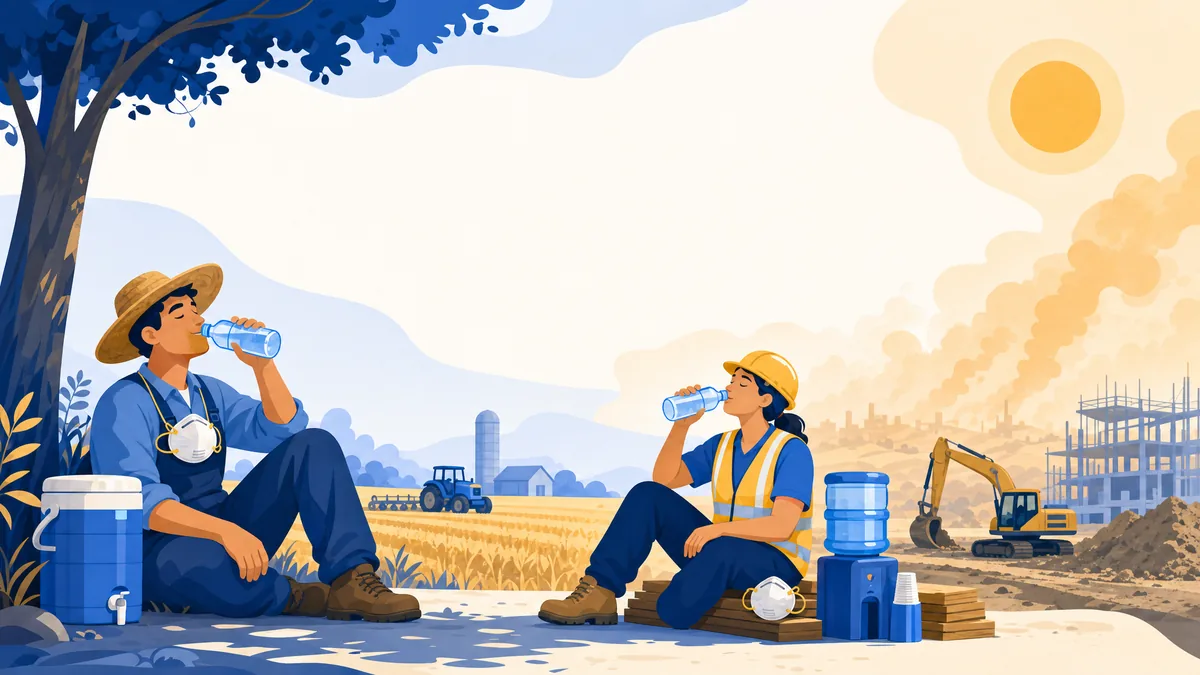
When the temperature climbs and the sky turns hazy, the workers who keep California running are the ones most at risk. If you spend your shift outdoors or in a hot, poorly ventilated space, your body takes on strain that an office worker never feels.
Heat illness and wildfire smoke are not just uncomfortable. They can cause real, lasting harm to your health. And when that harm happens because of your job, California law may treat it as a work injury.
Here is what every outdoor and warehouse worker in California should understand about the protections you are owed, the warning signs to watch for, and the steps that protect both your health and your rights.
Who Faces the Greatest Risk
Certain jobs put workers directly in the path of extreme heat and smoke. If you work in one of these roles, the risk is part of your daily reality:
- Farmworkers and agricultural laborers working in open fields
- Construction and roadwork crews under direct sun
- Landscapers and gardeners
- Warehouse and distribution workers in buildings without adequate cooling
- Delivery drivers and couriers moving in and out of hot vehicles all day
Heat and smoke do not affect everyone the same way. Age, certain medications, and existing health conditions can make a worker more vulnerable. New employees and those returning after time off are also at higher risk before their bodies adjust to the heat.
It is also worth remembering that heat builds up over a long shift. You may feel fine in the morning and reach a dangerous point by the afternoon without realizing how much strain your body has taken on. Humidity, heavy protective clothing, and physically demanding tasks all raise the risk even further.
What California's Heat Illness Prevention Rules Require
California has one of the strongest heat protection standards in the country. Under Cal/OSHA's Heat Illness Prevention standard, employers of outdoor workers must take specific steps to keep you safe. These are not suggestions. They are legal requirements.
Your employer generally must provide:
- Access to fresh, cool drinking water, free of charge, so you can stay hydrated throughout your shift
- Access to shade for cooling and rest when temperatures rise, and whenever a worker asks for a break to cool down
- Rest breaks that allow you to recover before heat illness sets in
- Training so you and your supervisors can recognize the warning signs and respond quickly
When conditions reach high heat, employers must follow additional procedures, such as closer observation of workers, reminders to drink water, and clear steps for responding to someone who shows symptoms. If your workplace ignores these basics, that failure can matter a great deal if you are later injured.
Keep in mind that these protections apply regardless of your immigration status. California's workplace safety and workers' compensation laws are designed to protect all workers who are hurt on the job. If you are being denied water, shade, or rest breaks, that is a problem your employer is responsible for, not a burden you have to quietly carry.
Recognizing Heat Exhaustion and Heat Stroke
Heat illness moves along a scale, and it can turn serious fast. Knowing the difference between early warning signs and an emergency can save a life, possibly your own or a coworker's.
Signs of heat exhaustion often include:
- Heavy sweating, weakness, or fatigue
- Dizziness, headache, or nausea
- Cool, clammy skin and a fast, weak pulse
Heat stroke is a medical emergency. Warning signs include a very high body temperature, hot and dry or flushed skin, confusion, slurred speech, fainting, or seizures. If you see these signs in yourself or a coworker, call 911 right away and move the person to a cool, shaded place. Heat stroke can cause permanent damage or death if it is not treated immediately.
Do not push through severe symptoms to finish a task. Your health comes first, and stopping to cool down is your right. A short break to recover is far better than a trip to the emergency room, or worse.
Wildfire Smoke and Your Lungs
California summers and falls now bring wildfire smoke that can hang in the air for days. That smoke carries fine particles, known as PM2.5, that travel deep into the lungs and can harm your breathing and your heart.
California has a wildfire smoke protection standard that requires employers to act when smoke drives air quality to unhealthy levels. Depending on conditions, that can mean:
- Checking air quality and communicating the risk to workers
- Reducing exposure where possible, such as adjusting schedules or moving work indoors
- Providing respirators, such as N95 masks, so workers can protect their lungs when the air becomes unhealthy
Breathing wildfire smoke on the job can leave workers with coughing, shortness of breath, worsened asthma, and other respiratory problems. For some, the effects linger long after the smoke clears. A cloth face covering or bandana is not the same as a properly fitted respirator, and it does not offer the same protection from fine smoke particles.
When Heat and Smoke Injuries Are Covered by Workers' Compensation
Here is the point that matters most for your future. Heat exhaustion, heat stroke, and respiratory harm from wildfire smoke exposure at work can be compensable workers' compensation injuries in California. If you were hurt because of conditions on the job, you may have the right to benefits.
Workers' compensation is a no-fault system. That means you generally do not have to prove your employer did something wrong to receive benefits. You simply need to show that your injury arose out of and happened in the course of your employment.
Benefits can include medical treatment for your condition and temporary disability payments while you recover. Temporary disability generally pays about two-thirds of your average weekly wage during the time you cannot work, subject to limits set by law. If a heat or smoke injury leaves you with lasting effects, you may also be entitled to permanent disability benefits.
To learn more about how job-related conditions are handled, see our overview of workplace injuries.
What to Do If You Are Hurt on the Job
Acting promptly protects both your health and your claim. If heat or smoke makes you sick at work, take these steps:
- Get medical care right away, and tell the provider your symptoms started at work
- Report the injury to your employer as soon as you can, in writing if possible
- Write down what happened, including the date, the conditions, and whether water, shade, or masks were provided
- Keep copies of any medical records and notices you receive
Do not assume you must simply live with the harm or return to unsafe conditions. The law is on the side of injured workers, and you have the right to ask questions and get help. Reporting an injury or a safety problem is your right, and retaliation against you for doing so is not allowed.
Talk to a Firm That Has Stood With California Workers Since 1965
The Law Offices of Solov & Teitell, APC have represented injured California workers since 1965. From our Los Angeles offices, we help farmworkers, construction crews, warehouse staff, delivery drivers, and others understand their rights and pursue the benefits they have earned.
We serve clients in English, Spanish, and Korean, so language should never stand between you and the help you need. Your consultation is free, and there is no fee unless we recover for you.
If you have been sickened by heat or wildfire smoke on the job, learn more about your options on our workplace injuries page, see the first steps to take in our guide on what to do after a work injury, check whether you have a claim with our free eligibility quiz, then contact us for a free, confidential review of your situation. The sooner you reach out, the sooner we can help protect your health and your future.
This article is general information about California law and is not legal advice. For advice about your situation, consult a qualified attorney.