
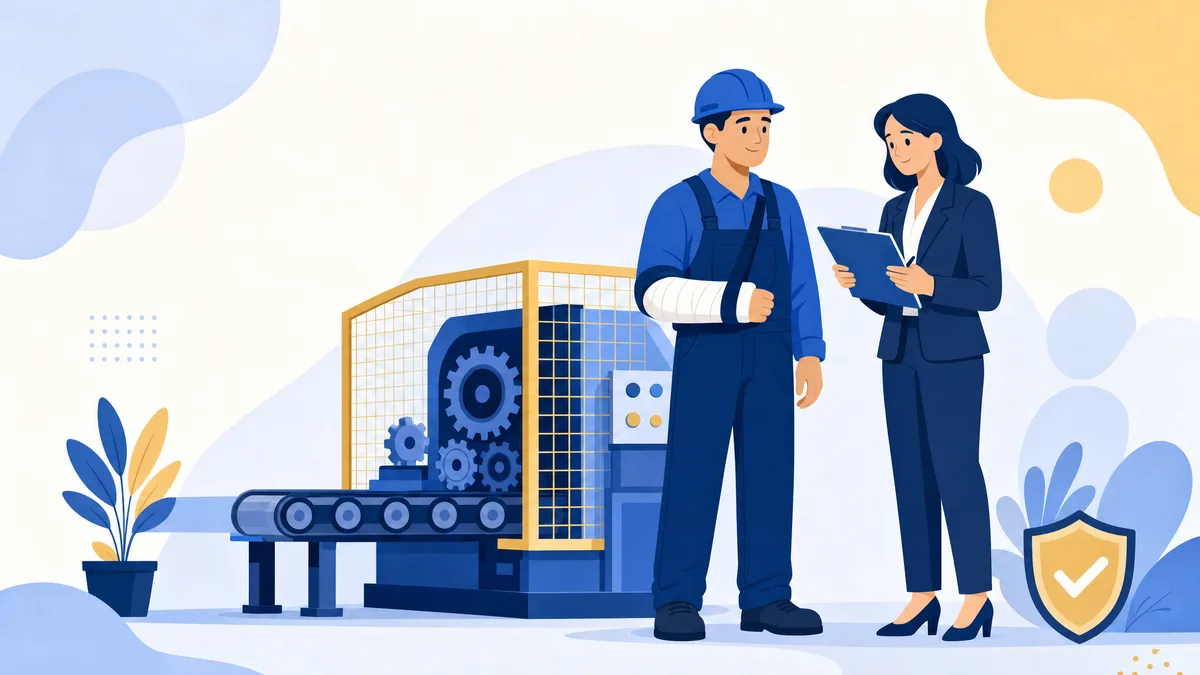
The machines that power factories and warehouses can do serious harm in an instant. A moment of contact with a moving part can lead to a crushed hand, a lost finger, or worse.
If you were hurt by machinery or equipment at work in California, the workers' compensation system is there to help you get medical care and benefits while you recover.
This guide explains, in plain terms, how these injuries are handled and what benefits may be available when you cannot go back to the job you had before.
The Kinds of Injuries Machines Cause
Industrial equipment is powerful, fast, and unforgiving. When something goes wrong, the injuries are often severe and life-changing.
Common machine and equipment injuries include:
- Amputations of fingers, hands, arms, or other body parts
- Crush injuries, where a body part is caught between or under heavy parts
- Degloving, where skin is torn away from the tissue beneath it
- Deep lacerations and puncture wounds
- Broken bones and nerve damage
- Injuries from unguarded or malfunctioning machinery
Here is something important to know: California workers' compensation is a no-fault system. You generally do not have to prove your employer was careless. If you were injured while doing your job, your claim can move forward regardless of who was at fault.
Machine Guarding and Safety Rules
Many machine injuries happen because a safety measure was missing, removed, or not followed. California's workplace safety agency, Cal/OSHA, sets rules meant to protect workers around dangerous equipment.
Two of the most important safeguards are:
- Machine guarding. Barriers and shields are supposed to keep hands and bodies away from moving parts, blades, and pinch points.
- Lockout/tagout procedures. Machines are supposed to be shut down and locked out before workers clean, service, or clear a jam, so the equipment cannot start up unexpectedly.
When guarding is missing or lockout/tagout is skipped, workers get hurt. Even so, you do not need to prove a safety violation to receive workers' compensation benefits. The no-fault system means your medical care and benefits are not conditioned on blaming anyone.
Treatment and Time Away From Work
Serious machine injuries often require immediate and ongoing medical care. Depending on what happened, treatment may involve emergency surgery, efforts to repair or reattach a body part, skin grafts, hardware to stabilize broken bones, and long-term physical therapy.
Under California workers' compensation, medical treatment that is reasonably necessary to cure or relieve your injury should be covered. If you cannot work while you heal, you may be entitled to temporary disability benefits that help replace part of your lost wages.
Recovery can take time, and some workers never regain full use of the injured body part. That reality is exactly what the next set of benefits is designed to address.
Permanent Disability for Loss or Loss of Use
When a machine injury causes lasting harm, the workers' compensation system recognizes it through permanent disability benefits. The loss of a body part, or the loss of use of a body part, is compensated even after your medical treatment is finished.
This can apply to injuries such as:
- The amputation of a finger, hand, or arm
- A hand or limb that no longer works the way it did
- Reduced grip strength, range of motion, or sensation
- Chronic pain or nerve damage that limits your abilities
Permanent disability is expressed as a rating, and that rating helps determine your benefits. Because the rating depends on the details of your injury, thorough medical documentation is essential. If you want a general sense of how ratings translate into benefits, you can explore our permanent disability calculator.
When You Can't Return to Your Old Job
A hand or arm injury can make it impossible to return to the same work you did before. If you cannot go back to your old position, you may be entitled to help moving forward.
California offers supplemental job displacement benefits, sometimes described as retraining benefits. These can provide a voucher to help pay for skill training or education so you can prepare for different work that fits your abilities.
This benefit recognizes a hard truth: a permanent injury can close the door on one career and require you to build a new path. The system is meant to help you take that next step.
Document Your Injury Fully
The strength of your claim depends heavily on the record behind it. To protect yourself after a machine or equipment injury, consider these steps:
- Report the injury to your employer as soon as you safely can
- Seek medical care promptly and keep every follow-up appointment
- Describe all of your symptoms and limitations to your doctors
- Keep copies of medical records, work restrictions, and notices
- Take dated photographs of your injury as it heals
- Write down how the injury affects your daily tasks and your ability to work
Complete documentation helps ensure your permanent disability rating and benefits reflect the real impact of what happened.
Talk to Solov & Teitell About Your Injury
The Law Offices of Solov & Teitell have represented injured California workers since 1965. From our Los Angeles office, we help workers hurt by dangerous equipment understand their rights and pursue the treatment and benefits they deserve.
We serve clients in English, Spanish, and Korean, and we offer a free consultation. There is no fee unless we recover for you. You can learn more about manufacturing accidents, get a sense of your benefits with our permanent disability calculator, and then contact us to discuss your situation.
Let us handle the claim while you focus on your recovery.
This article is general information about California law and is not legal advice. For advice about your situation, consult a qualified attorney.