
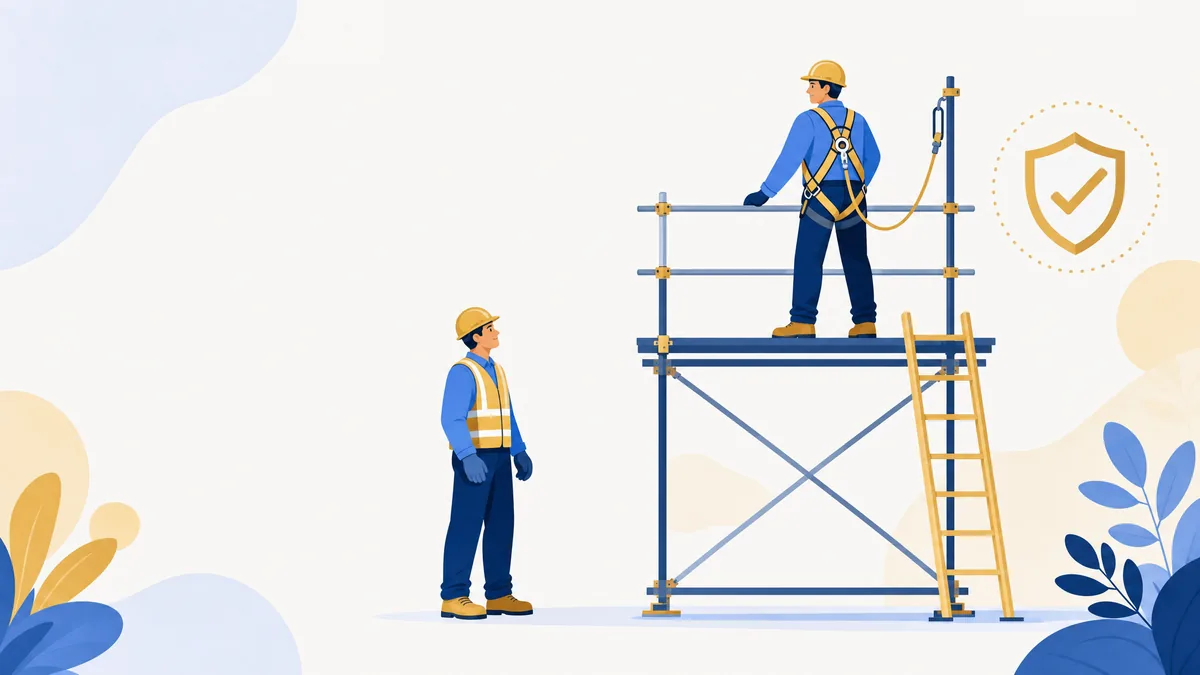
A fall from height happens in a second. One moment you are working on a scaffold, a ladder, or a roof; the next you are on the ground, hurt, and wondering how you are going to pay your bills.
If you were injured in a fall on the job in California, there is one thing you should know right away: you have the right to workers' compensation benefits, and you do not have to prove your employer did anything wrong to get them.
This article explains what those benefits cover, why fault does not matter, and the safety rules that are supposed to protect workers at height in the first place.
Workers' Comp Covers Your Fall Regardless of Fault
California's workers' compensation system is what lawyers call a "no-fault" system. That means you do not have to show that your employer was careless, that a coworker made a mistake, or that a piece of equipment was defective. If you were injured while doing your job, you are generally entitled to benefits.
This matters enormously after a fall, because injured workers often blame themselves. "Maybe I should have clipped in." "Maybe I moved too fast." Set that aside. Even if the fall was partly your own doing, workers' compensation still covers a work-related injury. The system was designed so that hurt workers get care and wage support without having to win a fight over who was at fault.
Why Falls From Height Are So Serious
Falls from scaffolding, ladders, roofs, and elevated platforms are among the most dangerous accidents on any job site. The height turns an ordinary slip into a life-changing event.
The injuries we commonly see from these falls include:
- Spinal injuries, including damage that can affect movement and sensation
- Traumatic brain injury, from mild concussions to severe head trauma
- Fractures — wrists, arms, legs, hips, ankles, and the pelvis
- Internal injuries that may not be obvious at the scene
Because some of these injuries do not show their full severity right away, it is important to get medical attention even if you think you "walked away" from the fall. Head and internal injuries in particular can be worse than they first appear.
The Benefits You Are Entitled To
California workers' compensation provides several types of benefits after a serious fall. The main ones are:
- Medical care. Treatment reasonably required to cure or relieve the effects of your injury — doctor visits, surgery, imaging, physical therapy, medication, and more. You should not be paying out of pocket for treatment of a work injury.
- Temporary disability. Wage replacement while you are recovering and unable to do your usual work. This helps keep money coming in during the weeks or months you are off the job.
- Permanent disability. If your fall leaves you with lasting limitations after your condition stabilizes, you may be entitled to permanent disability benefits based on how the injury affects you.
These benefits exist precisely so that a worker who falls does not have to choose between getting treatment and keeping the lights on at home.
The Safety Rules That Are Supposed to Protect You
Working at height is not supposed to be a gamble. Cal/OSHA — California's workplace safety agency — sets fall-protection requirements for scaffolding and elevated work. While these rules do not change the no-fault nature of your workers' comp claim, they explain what safe conditions should have looked like.
Common requirements for elevated and scaffold work include:
- Guardrails on scaffolds and elevated platforms to keep workers from going over the edge
- Personal fall-arrest systems — harnesses and anchor points — where guardrails alone are not enough
- Proper scaffold construction, including sound planking, secure footing, and correct assembly
- Safe, stable ladders that are the right type and height for the task
When these protections are missing or done wrong, falls become far more likely. Regardless of what safety measures were or were not in place, your right to workers' compensation for a work injury remains.
Construction, Warehouses, and Everywhere In Between
Falls from height are not limited to high-rise construction. They happen throughout the workforce.
- Construction workers on scaffolds, roofs, and elevated framing
- Warehouse workers on ladders, mezzanines, and order-picking equipment
- Maintenance and repair crews reaching elevated fixtures and equipment
- Painters, roofers, electricians, and others whose work regularly takes them off the ground
If your job puts you above ground level and you were hurt in a fall, the same protections apply. What matters is that the injury happened at work.
Get Your Fall Claim Reviewed by Solov & Teitell
A serious fall can leave you facing surgery, months off work, and a stack of questions about what happens next. You do not have to figure it out alone.
The Law Offices of Solov & Teitell have stood up for injured California workers since 1965. From our Los Angeles office we serve clients in English, Spanish, and Korean. If you were hurt in a fall, learn more about your rights after scaffolding accidents and other work-related falls, then contact us for a free consultation.
The consultation is free, and there is no fee unless we recover for you. Let us help you get the medical care and disability benefits you are entitled to after a fall.
This article is general information about California law and is not legal advice. For advice about your situation, consult a qualified attorney.